Highlight
Our featured pages showcase representative works from pre-internet era Hong Kong LGBT publications. Each featured page is accompanied by detailed background information and explanations to help visitors better understand the historical context, cultural significance, and social impact of these publications. We carefully select these works not only for their historical value but also because they reflect the real lives and voices of the Hong Kong LGBT community of that era. Through these featured pages, we hope visitors can appreciate the profound significance of this history and be inspired to learn more about Hong Kong's LGBT history.
Hand-written letters, documents and zines
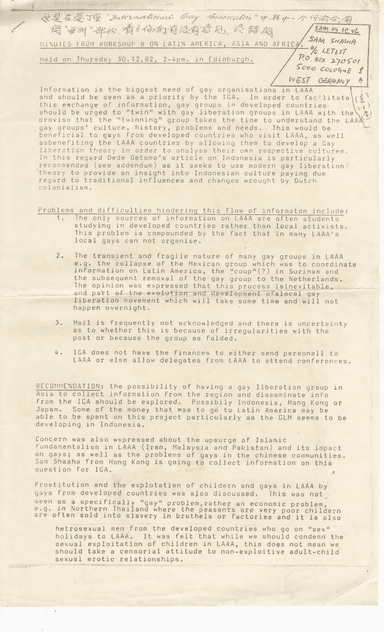
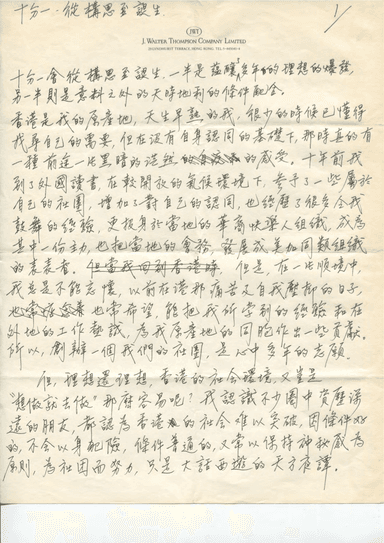
Before the internet era and the home computer age, handwriting and photocopies were significant means of communication. We have collected a few gems: handwritten letters, documents, notes and zines. SamShasha's letter to friends in Hong Kong, regarding Asian Gays discussions at the forum of International Gay Association in Edinburgh in 1982 is a rare found. Also, there are two letters and notes from Alan Li and Francis Lai, who founded the Hong Kong 10% Club. Letters show their thoughts and feelings, not merely factual information about the first registered Lesbian and Gay group in Hong Kong. The hand-writings also beautifully display their emotions. Early Lesbian and Gay groups started right after the decriminalisation of consensual male homosexual acts in 1991. Before that, the very first incident that brought the public attention and debates to rework the legislation was MacLennan’s Incident. This is a handwritten documentation of a forum discussing the incident: Forum: MacLennan's Incident (1981). Interestingly, in art and culture, Abstract Magazines were done on a super low budget, mostly hand-writing. And in an early zine Tongzhi Backwave, there were also hand-writing parts and letters to editors from the readers.
10% Club Newsletter
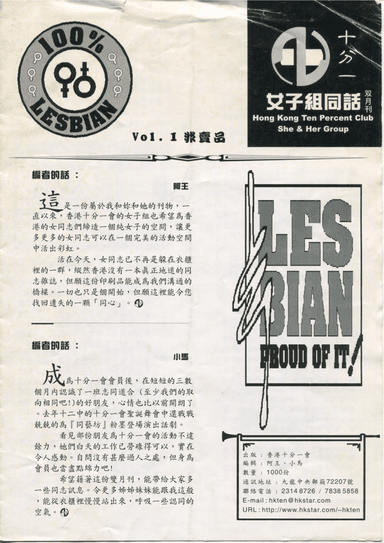
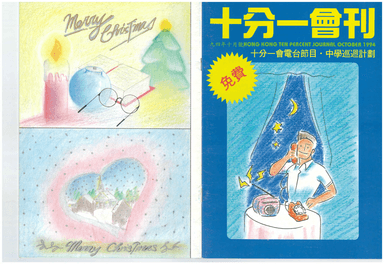
The Hong Kong 10% Club was the first registered gay and lesbian organisation in Hong Kong. They also published the most newsletters in printed matters. In the earliest A5-size monochrome printed material, there were articles discussing Tongzhi issues and movement, organisation reports, and creative writings on personal expression. Some were in Chinese, and some were in English in the early days. It later developed into A4 full-colour printing in a professional magazine approach, with editorial direction and columns. Zines from the early to mid-late 1990s showcase the atmosphere, activities and issues in the Tongzhi circle. There is also a newsletter for the Women Subgroup of the Hong Kong 10% Club, made by and for lesbians. Newsletter of Women Subgroup of the Hong Kong 10% Club
Nuliu
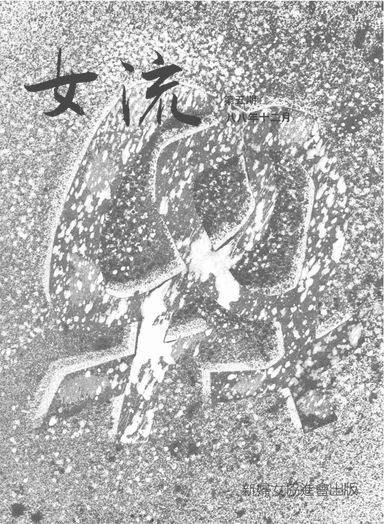
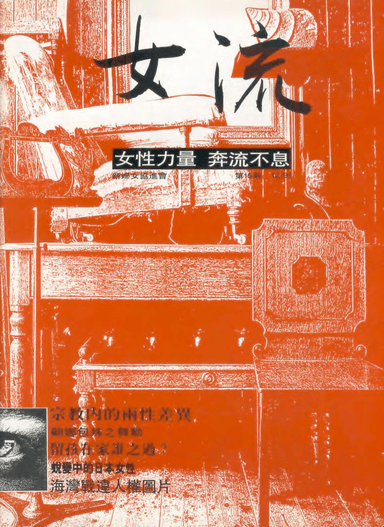
Nuliu is a publication of The Association for the Advancement of Feminism (a feminist women's group). Issues on this website are those with Tongzhi topics. Importantly, as early as 1988, they had produced a lesbian feature. Usually, people only think of Samshasha and gay men who co-founded the 10% Club as the early pioneers of the Lesbian and Gay movement. Actually, in the 1980s, there was also a female pioneer - Stephanie Liu. She was also interviewed and mentioned in Gumgum's article Women/Tongzhi/Feminism and Movement. In Nuliu issue 5, back in 1988, there was the very first feature done by and for lesbians, articulating personal experiences. Cheung Choi Wan's video interview also mentioned the origin of this feature. Nuliu Issue 22 in 1997 includes an interview with Stephaine, allowing us to understand her background as an indigenous woman inhabitant of the New Territories in Hong Kong and her experiences in social movement. Other articles in Nuliu include articles on creative writings, drawings, personal experiences, discussions on feminism, relations between the feminist movement and the Tongzhi movement, etc. A rich exploration and documentation indeed.
SamShaSha
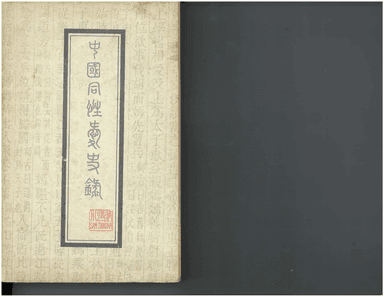
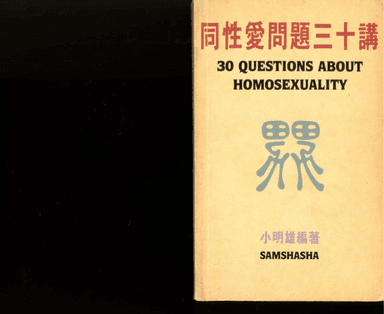
A pioneer in the Hong Kong Tongzhi movement, SamShaSha. In 1980, he published Pink Triangle - A Manifesto of Homosexuality His two books: History of Homosexuality in China and Thirty Questions about Homosexuality have far-reaching influence. He also organized the "1997 Tongzhi Forum", which was held once a month from October 1992 to December 1996. With a variety of topics, it was an important gathering of Tongzhi organisers and the public back then. There is a document stating a list of topics and speakers of the 1997 Hong Kong Tong Zhi Forum.
Nufengliu
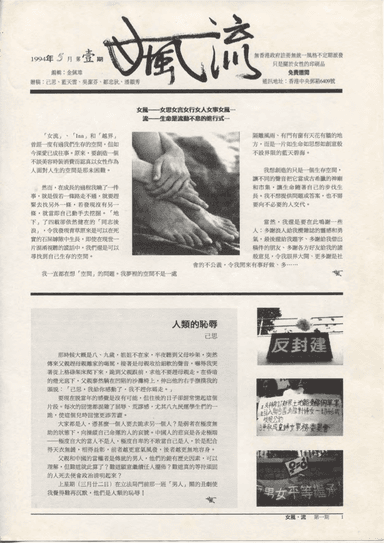
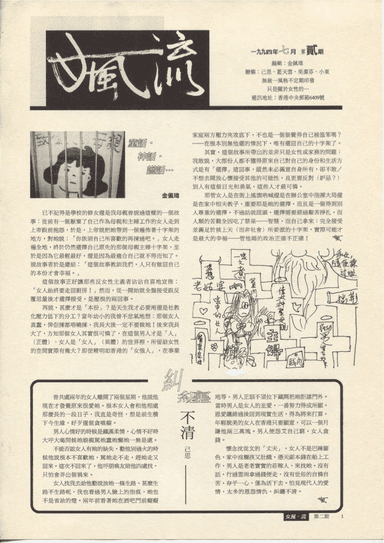
Nufengliu is an independent zine not belonging to an institution or organisation. It was edited and produced by a woman, truly DIY. Gumgum talks about why and how she published Nufengliu in the interview.
Tongzhi Backwave
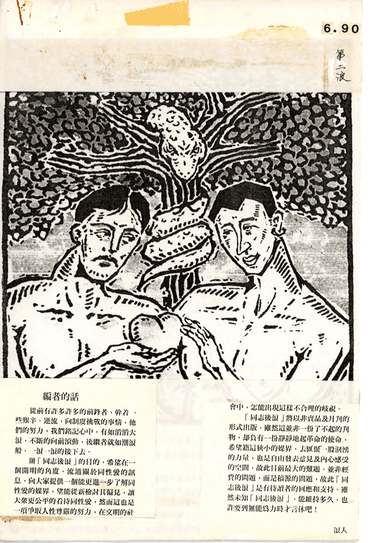
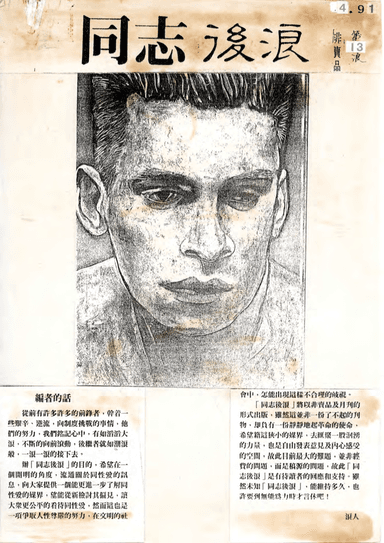
Tongzhi Backwave is another indie Zine that started in 1990 and was much earlier than Nufengliu. It was a summary and collection of newspaper clippings of lesbian and gay news in Chinese and English. Before the Internet, not to say online forums, it was a vital showcase of information and mass media coverage. In the interview, the editor talks about her relationship with readers and the background story of mailing Tongzhi Backwave to readers' homes every month. It seems unbelievable today to reach one’s actual home address. However, this was a major method of zine distribution before the Internet era.
Blessed Ministry Community Church
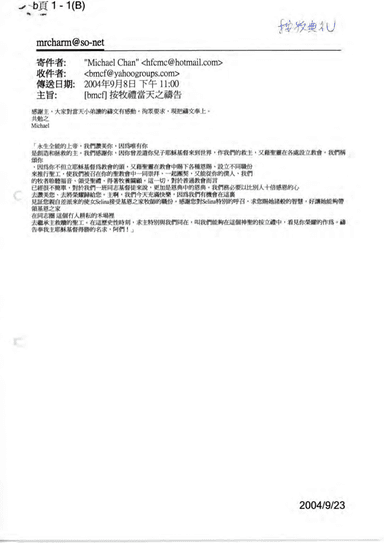
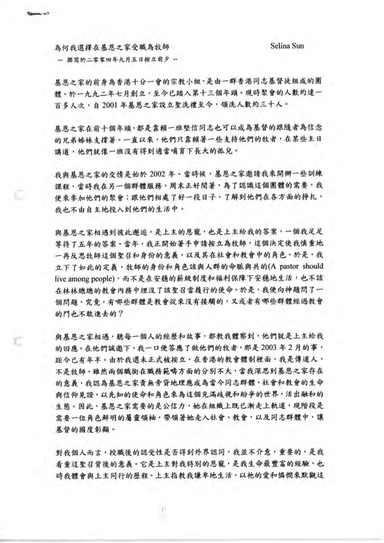
Blessed Ministry Community Church is a Hong Kong Tongzhi Church. The religious group, formerly known as the religion subgroup in the Hong Kong 10% Club, was founded in 1992 and officially registered as a society in 1995. The First issue of Blessed Ministry Community Church’s newsletter started in 1995, a typical A5-sized photocopied zine, like most zines at that time. Together with the 10th Anniversary Publication: It’s All Because of You - 10th Anniversary of Blessed Ministry Community Church, they carry and express the struggles of Tongzhi individuals and their faith in Christianity. Micheal discusses the development of Blessed Ministry Community Church in detail during the interview.
Isvara
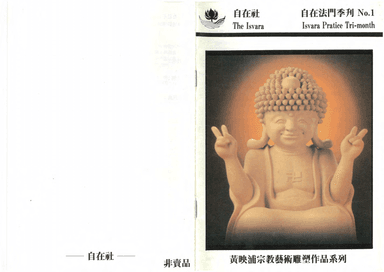
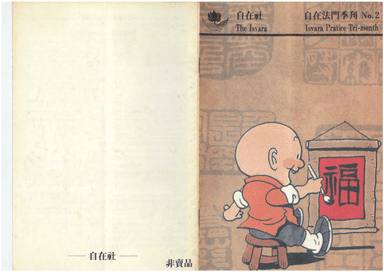
Like Blessed Ministry Community Church, Isvara was a religious organization yet a Buddhist Tongzhi group. There was not much information remaining. Thus, it is invaluable to obtain the first two issues of the quarterly zines - lsvara Practice.
Lui Tong Zhi
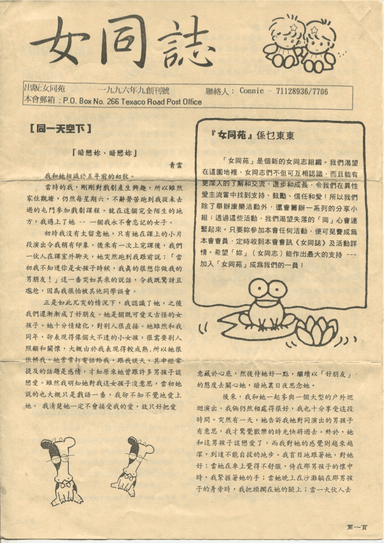
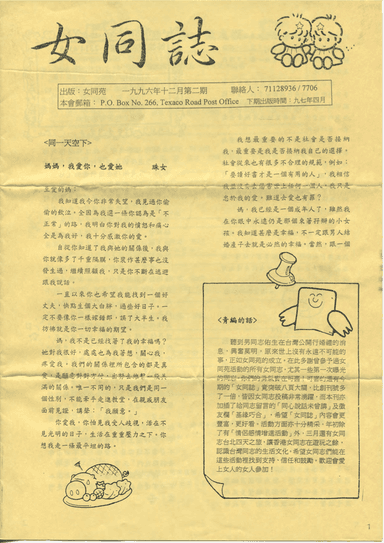
Lui Tong Zhi was a zine first published in 1996 by Lui Tong Yuen, a women Tongzhi group. The zine includes information about events and documentation, creative writing, and the most popular dating columns. In the interview, Connie explains the importance and fun of the well-received dating columns at that time.
Queer Sisters
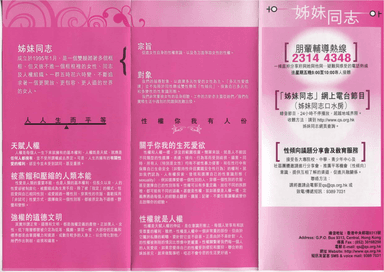
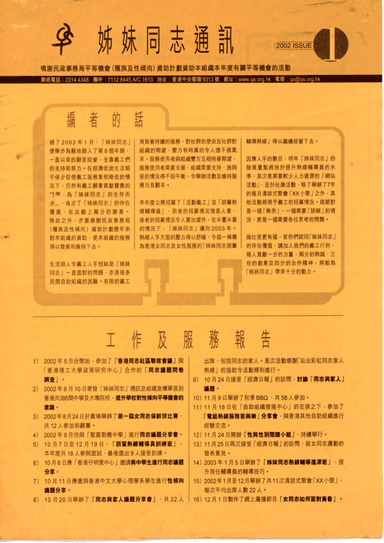
Started in 1995, Queer Sisters is a feminist organization involved in a movement fighting for sexual rights for women, and a more inclusive, more open and better world with more prominent space for women, as sexual beings and as subjects, who have different, various and everchanging routes in the immense domain of sexuality. Queer Sisters in Hong Kong: The First Feminist Study and Queer Sisters Newsletters are important documents regarding feminism and sexual rights movement in Hong Kong in the 1990’s. In the interview, Gumgum talks about the thoughts and ideas behind Queer Sisters, collaboration with feminist and women groups and the peer counselling outline.